
Pre Workout for Muscle Pump: Ingredients, Benefits and How to Get Better Training Pumps
A great pump makes a workout feel sharper and more satisfying, but it rarely happens by accident. This guide explains what a muscle pump really is, how a pre workout for muscle pump supports training, which ingredients matter, and how to build a simple pump-day routine around hydration, rest periods and tempo. It also takes an honest look at the formula of DART Extreme Pre-Workout by InsaneGenix, including what its 10 g serving offers and what realistic expectations look like. No hype, only practical, ingredient-level information.
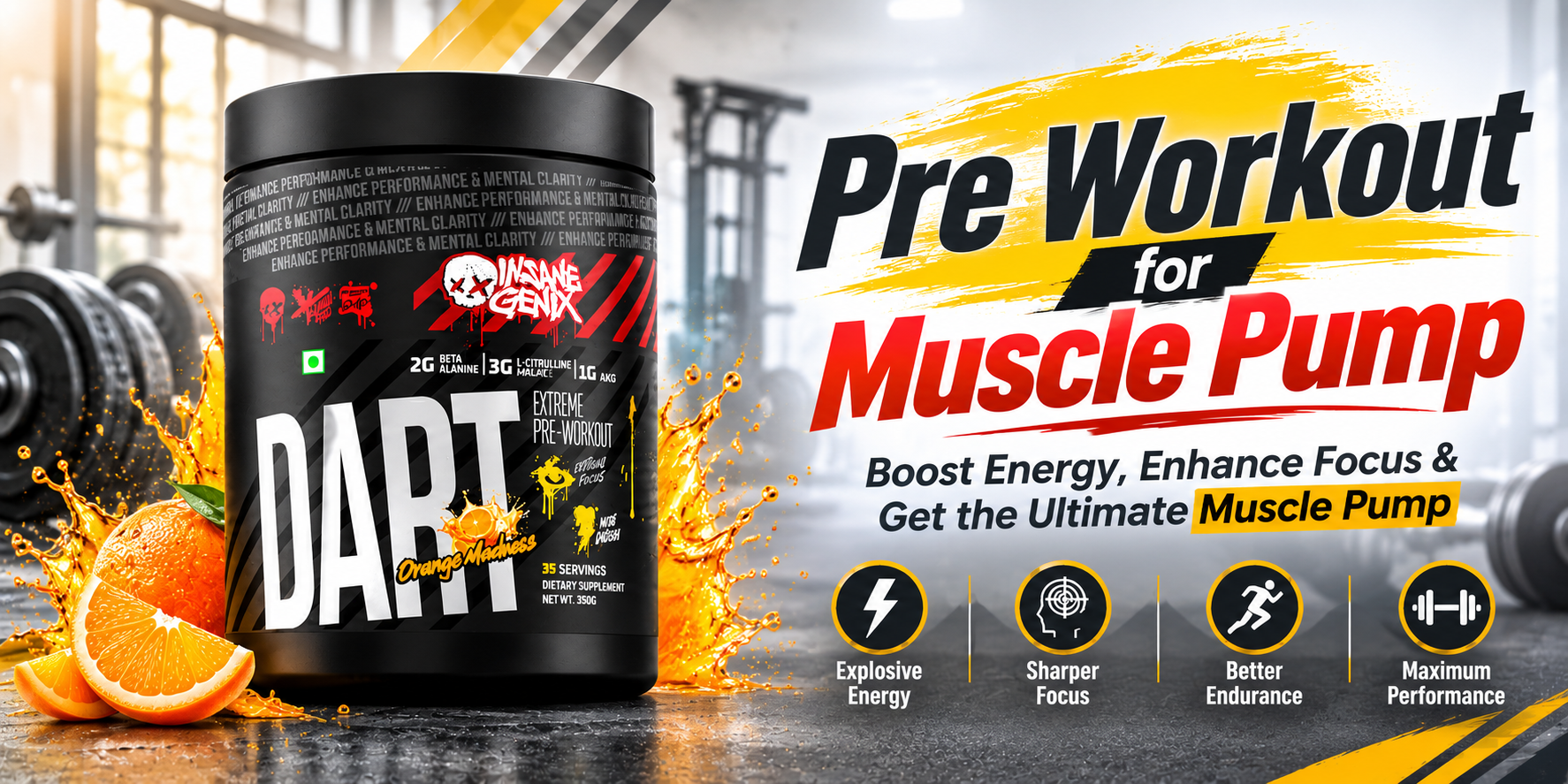
You finish your third set of curls, and your arms feel tight, full and almost too big for your sleeves. That feeling is the muscle pump, and almost every lifter has chased it at some point.
A well-chosen pre workout for muscle pump can support that experience, but it is only one piece of the puzzle. The right ingredients, enough water, smart exercise selection and decent rest periods all decide how full your muscles feel by the end of a session.
This guide takes a practical, no-hype approach. You will learn what a pump is, which ingredients are linked to it, how to read a label, and how to build a simple pump-day routine. We will also look closely at DART Extreme Pre-Workout by InsaneGenix, using its listed formula, without promising results no supplement can guarantee.
Quick answer: A pre workout for muscle pump is a supplement, usually a powder, that combines blood-flow-related ingredients such as citrulline malate and AAKG with energy and endurance ingredients such as caffeine and beta-alanine, to support how you feel and perform during training.
What Is a Muscle Pump and Why Does It Matter During Training?
A muscle pump is the temporary swelling and tightness you feel in a muscle during or right after resistance training. It happens because more blood and fluid collect in the working muscle than usual. It fades within hours, so it is not the same thing as lasting muscle growth.
Think of a sponge soaked in water. The sponge looks bigger and feels firmer while it is full, then returns to normal as the water drains. A pump behaves in a similar way, which is why a mirror check mid-workout looks so different from one the next morning.
Understanding the Science Behind Muscle Pumps
During hard sets, your muscles contract and demand more oxygen and nutrients. Your body responds by widening blood vessels, a process called vasodilation. Nitric oxide (NO), a small signalling molecule, plays a role in relaxing the walls of blood vessels so blood can flow more easily.
At the same time, when a muscle contracts repeatedly with short rest, blood flows in faster than it can leave, and fluid shifts into the muscle cells. That trapped blood and fluid create the full, tight feeling.
Some supplement ingredients are studied because they are involved in the body's nitric oxide pathways. That is where the idea of a "pump supplement" comes from.
Why Do Gym Enthusiasts Want a Better Muscle Pump?
There are a few honest reasons people care about pumps:
Motivation: A strong pump makes a session feel productive and keeps you engaged. Mind-muscle connection: Feeling the muscle swell can help you focus on the target muscle. Visual feedback: Fuller muscles are satisfying to see, especially on arm and shoulder days. Training enjoyment: Workouts that feel good are easier to stay consistent with.
It is worth being clear about one thing: a pump is a feeling and a short-term effect. Long-term progress still comes from progressive training, adequate protein, calories and sleep.
How Does Pre Workout for Muscle Pump Work?
A pre workout for muscle pump works by combining ingredients that support three things at once: blood-flow-related pathways, training energy and focus, and endurance during high-rep or high-intensity sets. It does not force a pump. It supports the conditions under which a good pump is more likely.
Most formulas can be sorted into three groups:
Goal Typical ingredients What it is meant to support
Pump support Citrulline malate, AAKG Nitric oxide pathways and blood flow
Energy and focus Caffeine, theobromine Alertness and training drive
Endurance Beta-alanine, taurine, creatine Work capacity and training performance The Connection Between Blood Flow and Muscle Pumps
Blood flow delivers oxygen and nutrients to the working muscle. When vessels widen, more blood can reach the muscle. Ingredients like L-citrulline are converted in the body to L-arginine, which is a precursor in nitric oxide production. This is the basic reasoning behind nitric oxide boosters.
The word "boosters" can mislead, though. Ingredients support a process that is already happening. They are not a switch.
How Exercise Intensity Influences Muscle Fullness
Exercise does most of the heavy lifting. Sets of 10 to 20 repetitions with moderate weight and short rest periods usually produce a stronger pump than heavy singles or triples. The muscle stays under tension, blood keeps entering, and the metabolic by-products of the work encourage fluid to stay in the area.
So even the best formula will feel underwhelming if the session is built around long rests and low reps.
Important Ingredients to Look for in a Muscle Pump Supplement
When comparing products, ingredient quality and clear label amounts matter more than flashy names. Here are the ingredients that appear most often in a good pre workout for muscle pump, explained in plain language.
L-Citrulline Malate and Nitric Oxide Production
What it is: An amino acid paired with malic acid. A 2:1 ratio means two parts citrulline to one part malate.
Why it is used: Citrulline is converted into arginine in the body, which feeds nitric oxide production. Many studies on citrulline's effect on exercise performance use higher doses, commonly in the range of 6 to 8 g, so the amount on the label is worth checking. Some formulas use smaller amounts alongside other ingredients.
AAKG and Its Role in Nitric Oxide Pathways
What it is: Arginine alpha-ketoglutarate, a form of the amino acid arginine bonded to a compound involved in energy metabolism.
Why it is used: Arginine is the direct raw material for nitric oxide. AAKG is a popular choice in older and newer pump formulas alike. Research results on arginine supplements are mixed, so it is best viewed as a supporting ingredient rather than a guarantee.
Beta-Alanine for High-Intensity Exercise
What it is: An amino acid that helps build carnosine, a compound that buffers acid in muscles during hard efforts.
Why it is used: It is linked to better performance in efforts lasting roughly one to four minutes, which suits high-rep sets. Beta-alanine commonly causes a harmless tingling feeling on the skin, called paraesthesia. It is normal for many people, but it surprises first-timers.
Creatine Monohydrate for Strength and Training Performance
What it is: One of the most researched supplements in sports nutrition.
Why it is used: Creatine supports the body's quick energy system, helping with short, powerful efforts like heavy sets. Its benefits build up with regular intake over time, not from a single pre-workout scoop. Many people also take a separate daily dose.
Taurine and Its Role in Muscle Function
What it is: An amino-acid-like compound found naturally in muscle tissue.
Why it is used: Taurine is involved in muscle contraction and fluid balance in cells. It is a common supporting ingredient in energy and endurance formulas.
Caffeine for Workout Energy and Focus
What it is: A well-known stimulant.
Why it is used: Caffeine can improve alertness and reduce perceived effort. It does not create a pump itself, which is a common misunderstanding. What it does is help you push harder, and harder training often leads to a better pump.
Pump ingredient cheat sheet:
Citrulline malate and AAKG: pump-related pathways. Beta-alanine and taurine: endurance support. Creatine: strength and training performance over time. Caffeine: energy and focus.
How to Choose the Right Pre-Workout Formula for Your Training Goals
Choose a formula by reading the full label, matching caffeine to your tolerance, and picking ingredients that fit how you train. Marketing words like "extreme" tell you very little. The facts panel tells you everything.
Check the Ingredient Label
Look for clearly listed amounts for each ingredient, not a vague "proprietary blend." Compare the serving size with the amounts listed, since a larger scoop can hide a thin formula. Check whether the dose of each ingredient is realistic compared with common research ranges. Look for batch testing information on the brand's website.
Understand Your Caffeine Tolerance
Caffeine sensitivity varies widely. A common daily upper limit for healthy adults is around 400 mg from all sources, so a pre workout with 200 mg takes up half of that before your morning coffee is counted. If you train late, caffeine can affect sleep. Beginners often do better starting with a half serving.
Choose a Formula That Matches Your Training Needs
Pump-focused lifters may prioritise citrulline and arginine-based ingredients. High-rep or circuit trainers may care more about beta-alanine and taurine. Early-morning trainers may want a solid caffeine dose. Stimulant-sensitive people may prefer a lower-caffeine formula or a stimulant-free one.
DART Extreme Pre-Workout by InsaneGenix: Understanding Its Formula
InsaneGenix offers DART Extreme Pre-Workout, a powder designed around energy, endurance and pump-related ingredients. Based on the product information provided, a 10 g serving contains:
Ingredient Amount per serving
L-Citrulline Malate 2:1 3000 mg
Beta-Alanine 2000 mg
AAKG 1000 mg
Taurine 1000 mg
Creatine Monohydrate 1000 mg
Caffeine Anhydrous 200 mg
Theobromine 50 mg
Citrus Aurantium 50 mg
How the Formula Is Put Together
Reading the label as a whole, the formula follows a familiar three-part logic:
Pump-related side: Citrulline malate (3 g) and AAKG (1 g) cover the nitric oxide pathway. Endurance side: Beta-alanine (2 g) and taurine (1 g) support high-effort sets. Energy side: Caffeine (200 mg), with smaller amounts of theobromine and citrus aurantium, supports alertness and drive. Strength side: Creatine monohydrate (1 g) rounds out the profile.
What to Keep in Mind
Be realistic. The citrulline amount here is lower than the doses often used in studies of citrulline alone, so it is best seen as part of a combined formula, not a high-dose pump product. The 1 g of creatine is a small amount compared with a typical daily creatine intake, so it is a supplement to, not a replacement for, regular creatine use.
None of this means the product will or will not work for you. Individual response differs, and no supplement can guarantee a particular pump or muscle growth. For flavour options and current details, check the product page directly.
Who Might Find It Suitable
A lifter who wants a moderate-to-solid caffeine dose with pump- and endurance-related ingredients in a single scoop may find it worth exploring. People sensitive to stimulants, pregnant or breastfeeding women, those with heart or blood pressure concerns, and anyone under 18 should speak with a healthcare professional first.
How to Use Pre-Workout for Better Training Sessions
Use a pre-workout exactly as the label directs, start with a smaller portion if you are new, and pair it with water and a proper warm-up. More powder does not mean more pump.
When Should You Take Pre-Workout?
Most people take their pre-workout around 20 to 30 minutes before training, which gives caffeine time to start working. Time it so the effects peak during your main sets, and avoid taking it too close to bedtime.
How Much Pre-Workout Should You Use?
Follow the serving size on the label. For DART Extreme, that is a 10 g serving. If you are new to stimulants, try a half serving for the first few sessions and see how you feel. Avoid stacking several caffeinated products in one day.
Why Proper Hydration Matters During Training
A pump is made of blood and fluid, so being under-hydrated can make it feel flat. Drink water steadily through the day, not just during your session. A simple habit is a glass of water with your pre-workout and regular sips between sets.
Training Tips to Improve Your Muscle Pump Naturally
You can improve a pump without any supplement by adjusting how you train. These habits are worth getting right whether you use a pre-workout or not:
Warm up properly. Five to ten minutes of light cardio plus a couple of lighter warm-up sets raises blood flow before the heavy work begins. Control your repetitions. A smooth, controlled tempo, such as two seconds up and two to three seconds down, keeps tension on the muscle. Keep rest periods short on pump work. For isolation exercises, 45 to 75 seconds is a common choice. Use progressive overload. Gradually add reps, weight or sets over weeks so your muscles keep being challenged. Stay hydrated. Water before, during and after training supports the whole process. Eat balanced meals. A meal with carbohydrates and protein a couple of hours before training gives you fuel and supports muscle fullness. Pick a suitable volume. Too little gives a weak stimulus, too much hurts recovery. A moderate number of hard sets per muscle works for most people.
A simple pump-day example (arms):
Cable curls: 3 sets of 12 to 15 reps
Rope pushdowns: 3 sets of 12 to 15 reps
Hammer curls: 2 sets of 10 to 12 reps
Overhead extensions: 2 sets of 12 to 15 reps
Common Mistakes That Can Affect Your Muscle Pump
Most "no pump" days come down to a handful of avoidable mistakes:
Not drinking enough water. The most common and easiest to fix. Skipping the warm-up. Cold muscles fill with blood more slowly. Taking too much caffeine. Jitters, a racing heart and poor sleep do not help training. Rushing through reps. Swinging weights removes tension from the target muscle. Training on an empty stomach and poor sleep. Low energy limits intensity and fullness. Expecting a supplement to do everything. A pre workout for muscle pump supports a good session; it does not replace one.
Frequently Asked Questions About Pre Workout for Muscle Pump
- What is the best pre-workout ingredient for a muscle pump?
L-citrulline is widely considered the most popular ingredient for pump support, with arginine forms such as AAKG often used alongside it. Both are linked to nitric oxide pathways. The best choice depends on the dose and the full formula.
- Does citrulline help improve muscle pumps?
Citrulline is converted into arginine in the body and supports nitric oxide production, which is why it is used in pump supplements. Evidence on performance benefits varies by dose and individual. Many people report feeling fuller muscles, but results are not guaranteed.
- Can pre-workout supplements improve workout performance?
Ingredients such as caffeine, creatine and beta-alanine have research behind them for supporting energy, strength or endurance. Effects are usually modest and work best alongside good training, food and sleep.
- How long does a muscle pump usually last?
A pump usually lasts from a few minutes to a couple of hours after training, depending on the workout, your hydration and your food intake. It is temporary and is not a measure of muscle growth.
- Is caffeine necessary for a muscle pump?
No. Caffeine supports energy and focus but does not create a pump directly. Stimulant-free formulas that use citrulline or arginine can still be used for pump support.
- Can beginners use muscle pump supplements?
Healthy adults can, but beginners should start with a lower serving, check caffeine content and focus first on technique, food and sleep. If you have a medical condition, talk to a doctor first.
- When should I take pre-workout before going to the gym?
Most people take it 20 to 30 minutes before training. Avoid taking it late in the evening, as caffeine can disrupt sleep.
- Is DART Extreme Pre-Workout suitable for people looking for energy and muscle pump support?
Its formula combines caffeine for energy with citrulline malate, AAKG, beta-alanine and taurine, which are commonly used for pump and endurance support. Individual results vary, and anyone sensitive to stimulants should start with a smaller serving.
Final Thoughts on Choosing a Pre-Workout for Muscle Pump
A good pre workout for muscle pump is about smart support, not shortcuts. Look for clear ingredient amounts, match the caffeine to your tolerance, and remember that hydration, nutrition, sleep and consistent, well-planned training do most of the work.
If you want a formula that combines pump-related ingredients with energy and endurance support, InsaneGenix and its DART Extreme Pre-Workout are worth exploring. Read the label, start sensibly, and judge it by how it fits your own training.
View more blogs
Best Pre Workout Muscle Growth – Blog
A pre-workout will not build muscle by itself, but the right one helps you train harder, longer and sharper. This guide explains the four jobs a muscle-growth pre-workout must do, checks real ingredient doses, and shows how InsaneGenix DART Extreme fits into a smart training plan.
Read article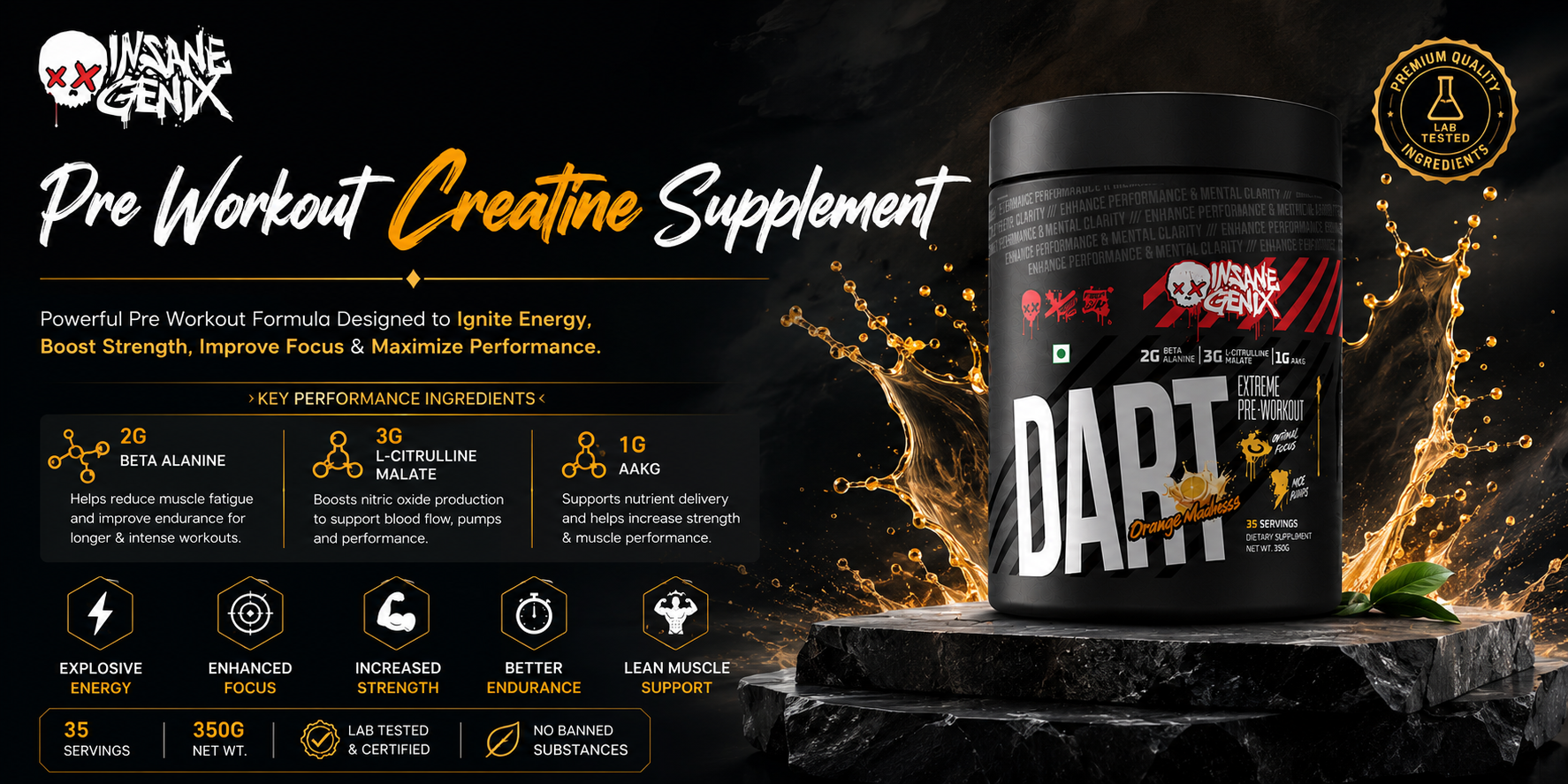
Pre Workout Creatine Supplement: What the Science Says and How to Use It Wisely
Creatine is one of the most researched performance supplements in the world, and many pre-workouts now include it. This article explains how creatine works, why daily consistency matters more than timing, what dose to aim for, and how the 1 g of creatine in DART Extreme Pre-Workout by InsaneGenix fits into a complete plan.
Read article
Best Workout Booster Supplement: A Practical Buyer's Guide for Everyday Lifters
A workout booster supplement should help you show up with energy, train with intent and recover well enough to repeat the effort tomorrow. This guide walks through real-life gym situations, a five-question buying test, ingredient explanations and a clear look at DART Extreme Pre-Workout by InsaneGenix, so you can decide with confidence.
Read article